supplementary identities change the inside of the trig function to go to different quadrants
figure: for an angle theta in the first quadrant, it can be reflected across axes to different quadrants, and the absolute value is the same
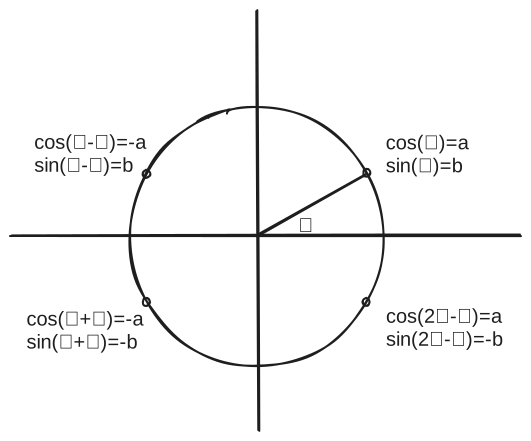
you can see that when an angle is transferred to different quadrants, the absolute value of the trig function results are the same. this is why we always calculate the value first, and then worry about the sign later, depending on the quadrant the original angle is in
for example, to reflect an angle in the first quadrant to be in the second quadrant, we need to change the angle into
referencing the figure above, we see that for any angle in the first quadrant, and
that’s supplementary identities, basically. (could’ve chosen a better name, in my opinion)
for other quadrants, we have and for the third and fourth quadrants, respectively.
for angle in the second quadrant, is equal to
for angle in the third quadrant, is equal to
for angle in the second quadrant, is equal to {}
practice identifying supplementary identities
worked example: if , evaluate
the angle has increased by half a circle, making both sine and cosine change signs
worked example: if , evaluate
the angle is flipped horizontally due to . this makes cosine change sign but sine stays the same
worked example: if , evaluate
the angle changes direction, arriving at the original point but reflected horizontally. this makes sine change sign but cosine stays the same
worked example: if , evaluate
the angle is flipped horizontally due to and also flipped vertically due to . this makes both sine and cosine change signs
worked example: if , evaluate
the angle has been increased by a full circle so angle does not change
practice evaluating supplementary identities
worked example: evaluate
is half of a full circle, and is an angle in the second quadrant
applying identities
applying signs
in second quadrant, only sine is positive
worked example: evaluate
is a bit more than half a circle, in the third quadrant
applying identities
applying signs
in the third quadrant, only tangent is positive
worked example: evaluate
is a bit more than half a circle, in the third quadrant
applying identities
applying signs
in the third quadrant, only tangent is positive
worked example: evaluate
is almost a full circle, in the fourth quadrant
applying identities
applying signs
in the fourth quadrant, only cosine is positive